
Published on February 26, 2026
Welcome, colleague AI: How artificial intelligence is redefining our working world
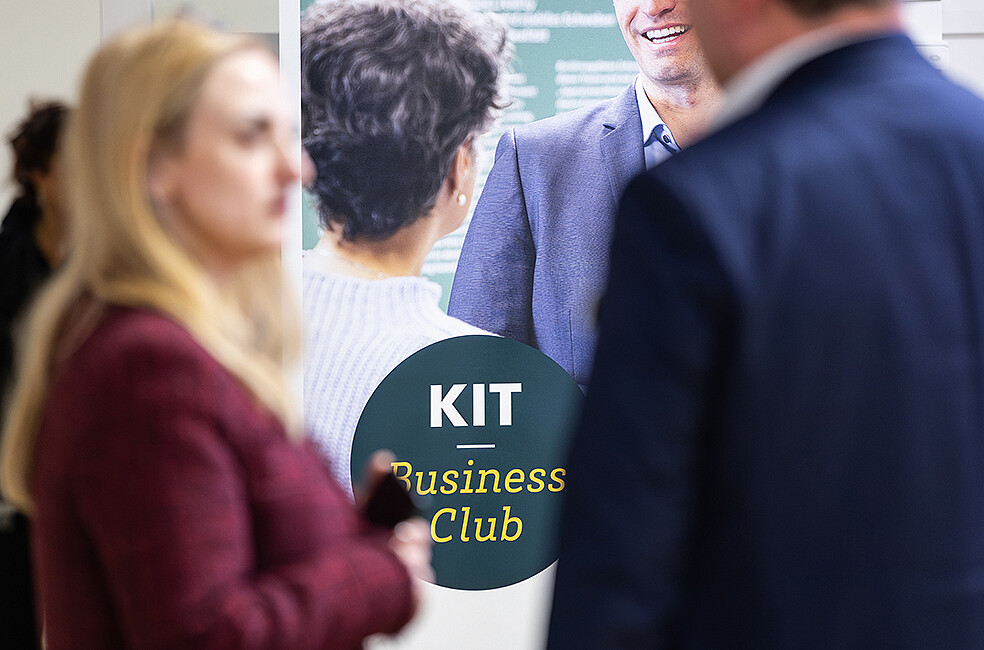
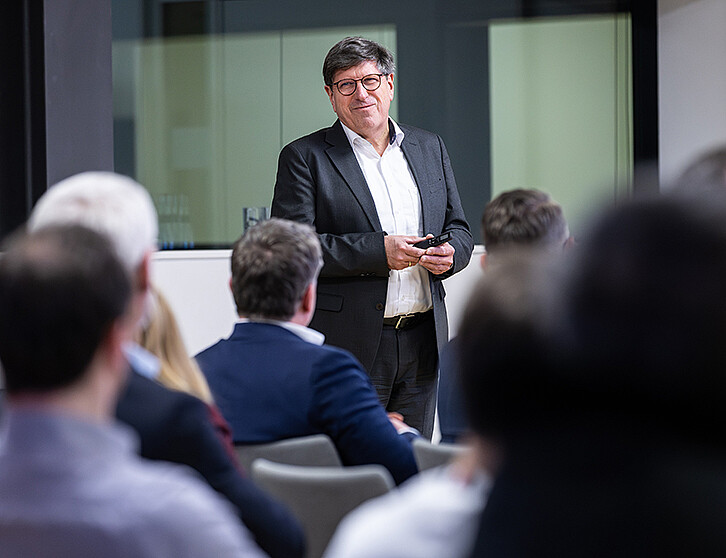
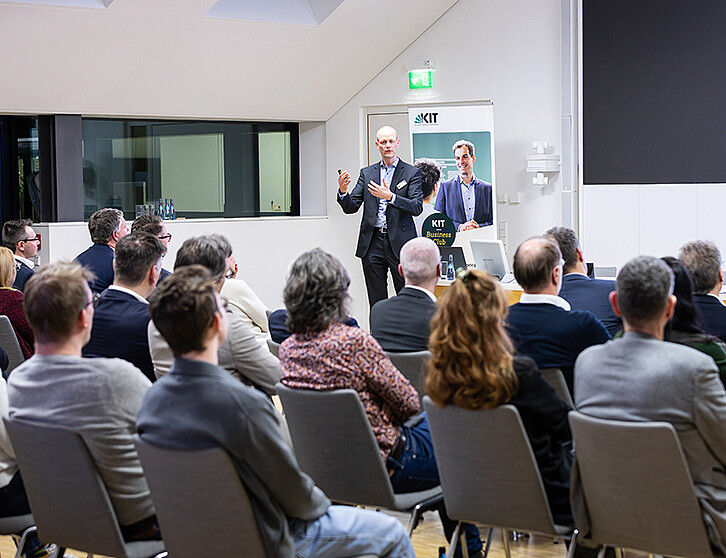
Artificial intelligence has long been more than just a technical tool – it is increasingly becoming an active partner in everyday work. For companies, this not only opens up potential for efficiency, but also raises key questions about leadership, organization, and responsibility. Those who learn today to integrate AI as a reliable part of decision-making and value creation processes will gain a measurable advantage – in speed, quality, and scalability. At the same time, there is a growing need to use these systems in a controlled, trustworthy, and organized manner. This brings a crucial question to the fore: What role do humans play in a working world where systems not only support but also help shape decisions? This was precisely the focus of our last KIT Business Club event: around 40 participants from industry and research gained insights into the field of activity of our ‘colleague AI’, the changes it is triggering, and the scope for creativity that companies have.
Man AND machine: From system to team?
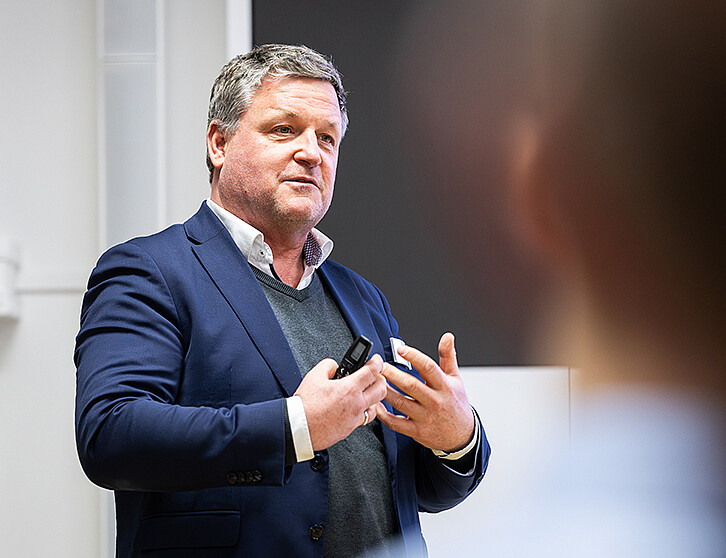
Data has long been considered the raw material of the 21st century, but it is only through intelligent analysis that it can generate real added value. Prof. Alexander Mädche (Institute for Information Systems) provided an insight into current research at KIT on the use of generative and agentic AI for business intelligence and analytics in companies. The results of his research projects suggest that it is not AI itself that is decisive for the successful introduction and use of AI systems, but rather the empowerment of employees and the creation of suitable organizational conditions. Prof. Barbara Deml (Institute of Human and Industrial Engineering) expressed a similar view in her contribution. Her research team observed that with the support of AI, human performance improves, for example, in image evaluation tasks. However, when a team of humans and machines is formed on an equal footing, paradoxically, uncertainties arise and overall performance declines. According to Deml, this is due to a trust gap between humans and AI.
Trust is the key
Trust does not arise on its own. However, there are promising approaches to closing this gap: ‘AI literacy’, i.e., genuine competence in dealing with and understanding AI, is an important foundation. Transparent communication about models, parameters, and system limits influences trust in AI colleagues just as much as a system design that does not relieve humans of their responsibilities but rather specifically involves them and challenges them cognitively. The system of humans AND machines needs a phase of joint learning and co-evolution in order to achieve peak performance, as emphasized by the research of Deml and Mädche. Their work also shows that the Karlsruhe Institute of Technology offers a special framework for testing and collaborating on new technologies such as AI thanks to the close integration of business and science.
The art of orchestration
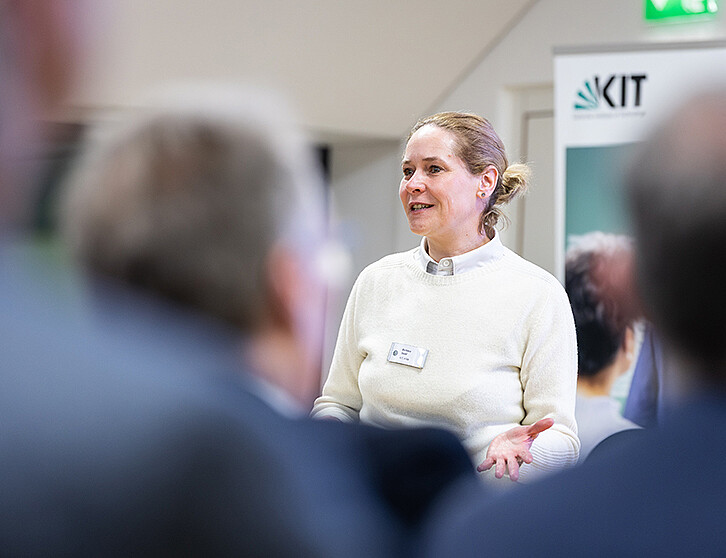
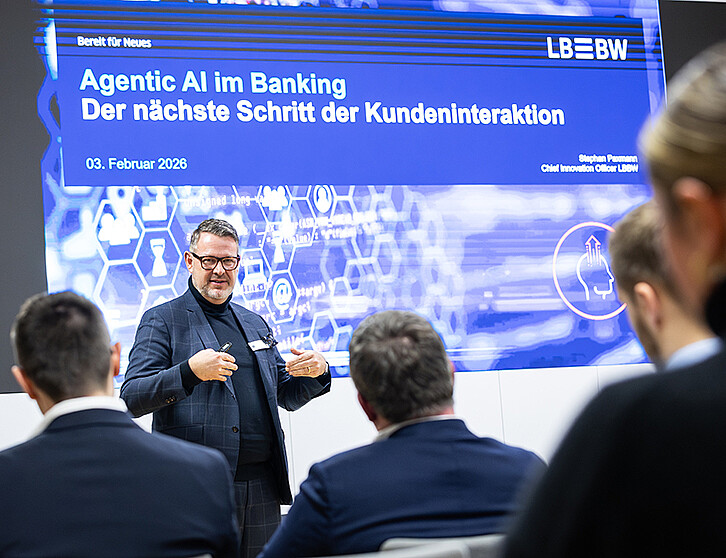
If data analysis and automation are nothing new and are constantly improving in terms of quality, what is the real AI revolution? Stephan Paxmann (LBBW) gave a clear answer at the fireside evening: Agent systems are increasingly coming into focus, as they can seamlessly connect and coordinate AI solutions that were previously isolated via LLM. This shifts the central competence of humans away from the development of individual solutions toward the orchestration of complex agent landscapes. This perspective opens up new forms of customer service in the field of generative finance: natural language-based interfaces or avatars, more personalized and context-related advice, and proactive suggestions for action instead of pure reaction.
In industrial automation, too, the role of humans is currently undergoing a fundamental shift, as Dr. Heiko Koziolek (ABB) reported. Language models are overcoming the limitations of traditional IT – for example, in the translation of customer requirements and complex diagrams into control logic. The development of AI-supported control logic is becoming a key competitive field in automation technology worldwide. This not only makes engineering faster and more cost-efficient, but also more robust and scalable.
And what about humans?
Their role is shifting – from detailed operational work to supervision, intervention in critical situations, and planning decisions. At the KIT Business Club, our events create a space where partners from business and science can discuss precisely these developments: to share experiences, sharpen perspectives, and develop new approaches to cooperation together with KIT. After all, the collaboration between humans and AI is no longer a question for the future, but a task for the present.
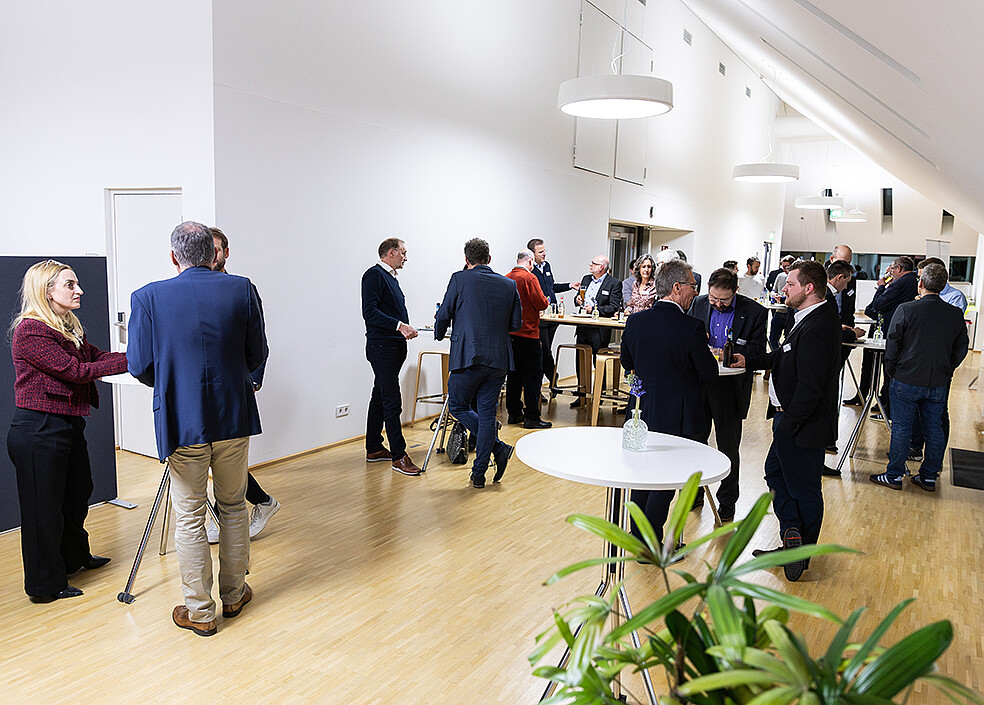
We would like to thank all participants for the open dialogue and look forward to continuing the discussions. Further information about the KIT Business Club can be found on our website. We will inform our members about upcoming events in advance and directly.
And what does AI itself say about this development? We asked it for its assessment:
“As AI, I am constantly under scrutiny – which is perfectly fine, because it's the best way for me to show what I can do. And when you critically accompany me as a ‘colleague,’ it helps me enormously (algorithmically speaking) to support you even more meaningfully and responsibly – without any coffee breaks.” (Co-Pilot, Feb. 2026)
comments about this article
No Comments