
Published on October 10, 2025
Sustainable, digital, cooperative: KIT explores opportunities in the circular economy
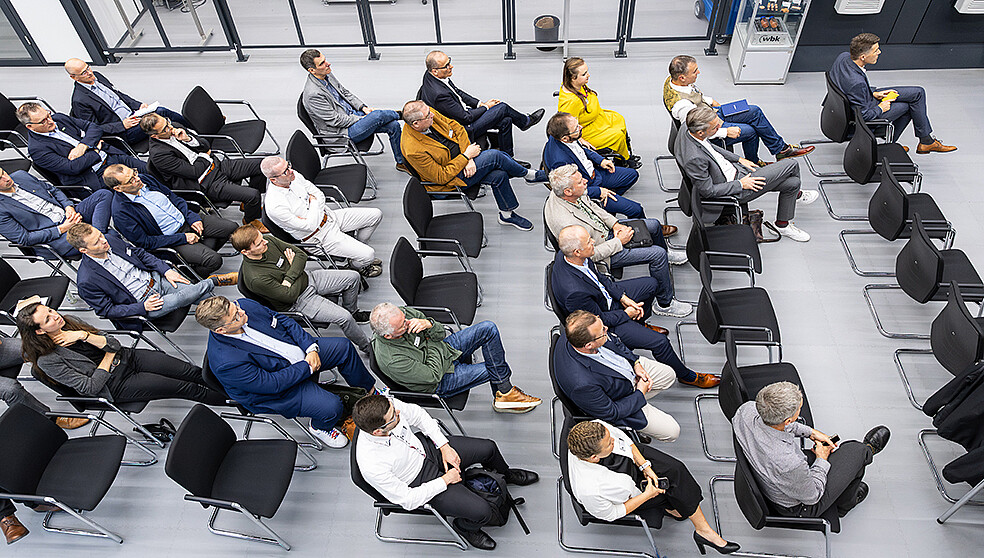
Reducing resource consumption, promoting circularity, securing supply chains: these are key concerns that occupy business, science, and society in many fields of technology. However, the path to sustainable circular solutions is complex and multifaceted. This makes it all the more important to provide spaces where stakeholders can discuss goals, key building blocks, and solutions. The fact that the topic of circular economy is met with great interest was demonstrated at the latest KIT Business Club event on September 23, 2025, which attracted around 35 participants from industry and research.
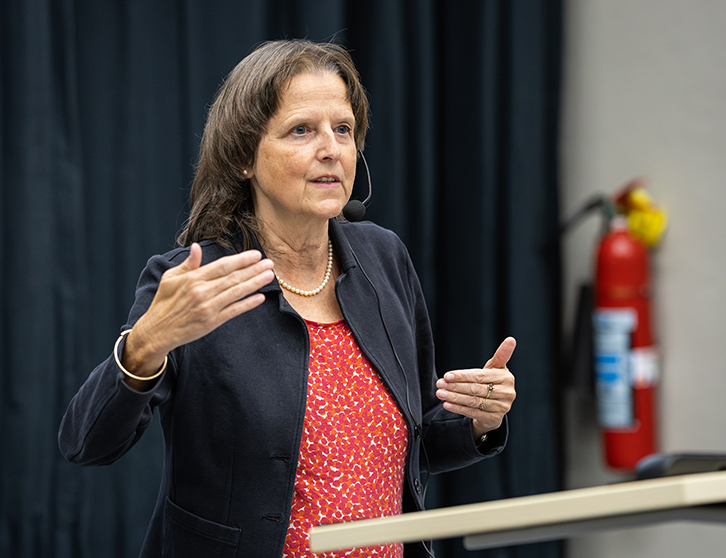
Digital transparency and cooperation
Prof. Dr. Kora Kristof, Vice President Digitalization and Sustainability at KIT for the past two years, emphasized the topicality of the issue in her opening statement. The two topics in her remit are directly interlinked: without digital processes and transparency regarding materials, products, and production methods, circular strategies can hardly be implemented effectively. The participants agreed that a functioning circular economy along the entire value chain requires cooperation across industry and disciplinary boundaries. With its wide range of research fields and opportunities for collaboration, from bilateral projects to large-scale research laboratories, KIT offers the best conditions for putting concepts into practice.
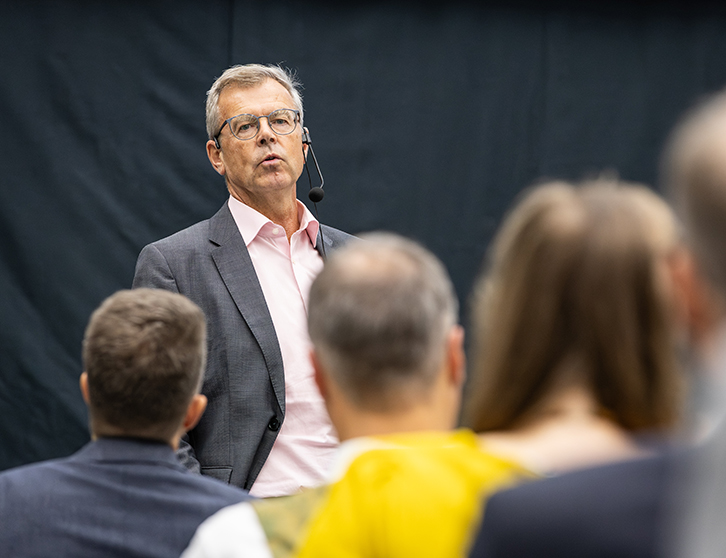
From value chains to circularity
Prof. Dr.-Ing. habil. Volker Schulze from the wbk Institute of Production Science provided an initial insight into the diverse activities at KIT with his presentation on “Rethinking resources: From linear to circular production.” The aim of the “Circular Factory” collaborative research center, which has been operating at KIT since 2024, is to develop concepts and strategies for the remanufacturing and cyclical use of products and components. However, concrete technologies are also being researched – from automated disassembly and quality testing to the use of additive processes for reprocessing returned products. Guests were able to see the first prototypes for themselves in the wbk research hall.
Dismantle mattress tower
In addition to product cycles, other institutes at KIT are also looking at material cycles, e.g., for building materials or plastics, and how they interact with the environment. The pressure to act to ensure the sustainable management of our planet is enormous, as an alarming example shows: in the EU alone, so many used mattresses end up in the trash every year that they could be stacked to form a tower around 6,000 kilometers high. The company Evonik presented an example of sustainable solutions. It develops chemical and process engineering processes to recover valuable polymer components from products instead of disposing of them. The developments are promising, as Dr. Rupert Schnell and Dr. Andree Blesgen from Evonik emphasized. Recycling such materials, even on a large scale, seems entirely realistic in the coming years.
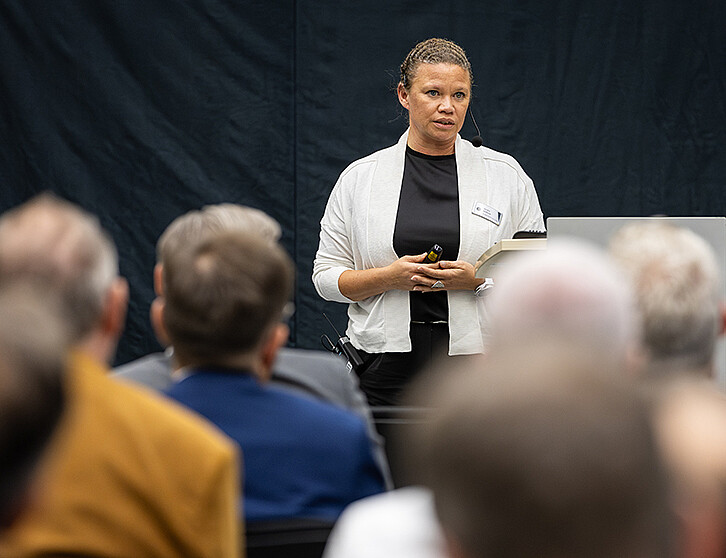
Circularity meets digitalization
According to many guests at the fireside evening, one of the biggest challenges facing the circular economy is developing business models that are economically viable in the face of global competition. Jessica Bethune from Schneider Electric also pointed this out. In her view, key factors in this regard are the digitalization and electrification of products and processes, which enable circularity and greater resource and energy efficiency. At the same time, Bethune said, the upcoming transformation needs clear framework conditions that promote courage, speed, and continuity in the implementation of new technologies.
Systematic circular strategies
Important input for this transformation is provided by the system analysis of circular processes, which is being carried out by the Institute for Industrial Production (IIP) at KIT, as presented to guests by Dr.-Ing. Justus Steins. When designing and evaluating cycle-oriented value chains, in addition to the macroeconomic consideration of technical solutions, organizational issues relating to the recording and logistics of material and product flows must also be taken into account. Here, too, the economic viability of possible business models is a decisive factor, with digitalization offering a range of new options, e.g., in pricing mechanisms or in the form of service models.
By combining theory and practice, the KIT Business Club's fireside evening event enabled a holistic understanding of the topic and created space for new collaborations. With events such as this, KIT underscores its commitment to driving sustainable development and providing a platform for dialogue between research, business, and society.
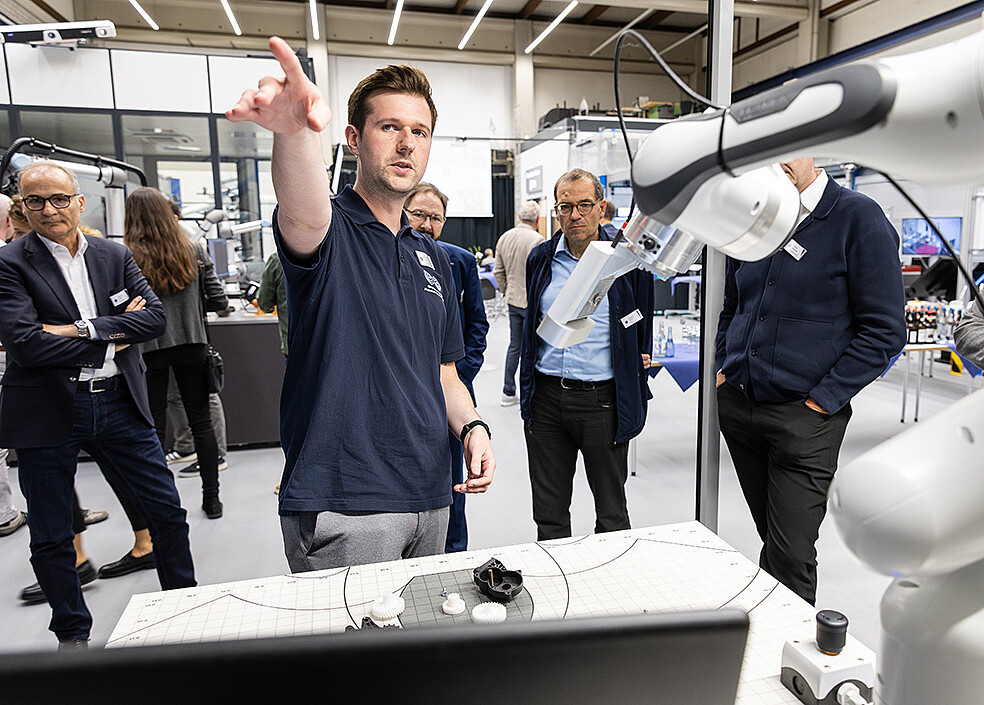
Christian Dreher from the Institute of Anthropomatics and Robotics (IAR) presented several prototypes from the Collaborative Research Center “Circular Factory” in the research hall, including robots for automated disassembly. (Photo: KIT)
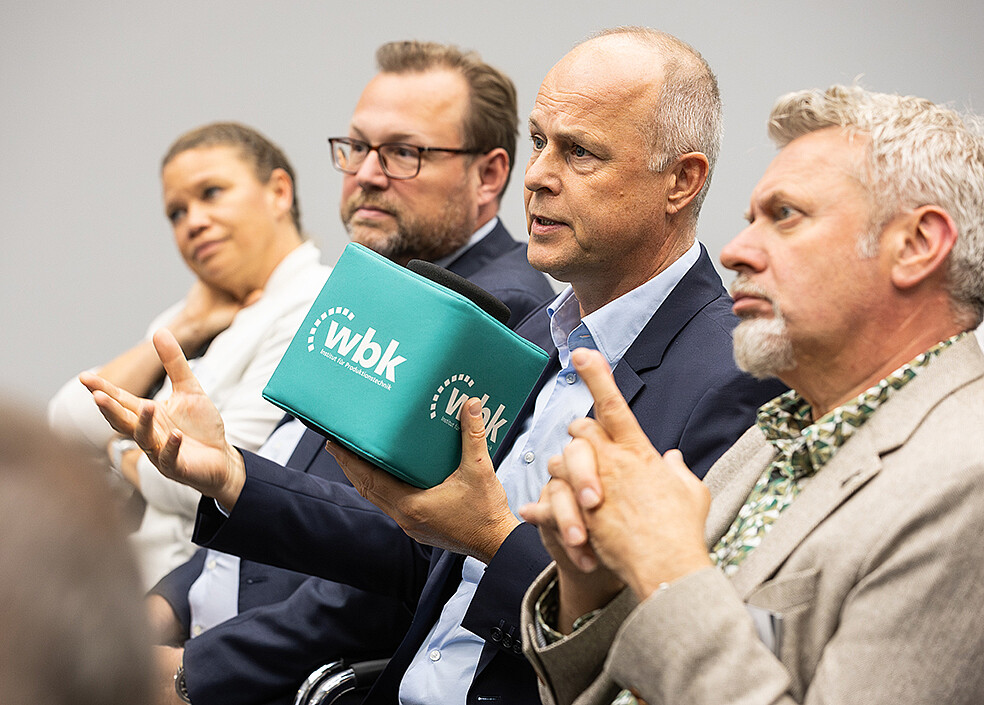
Following the technical presentations, the fireside evening provided an opportunity for dialogue between researchers and industry representatives to discuss new perspectives and questions. (Photo: KIT)
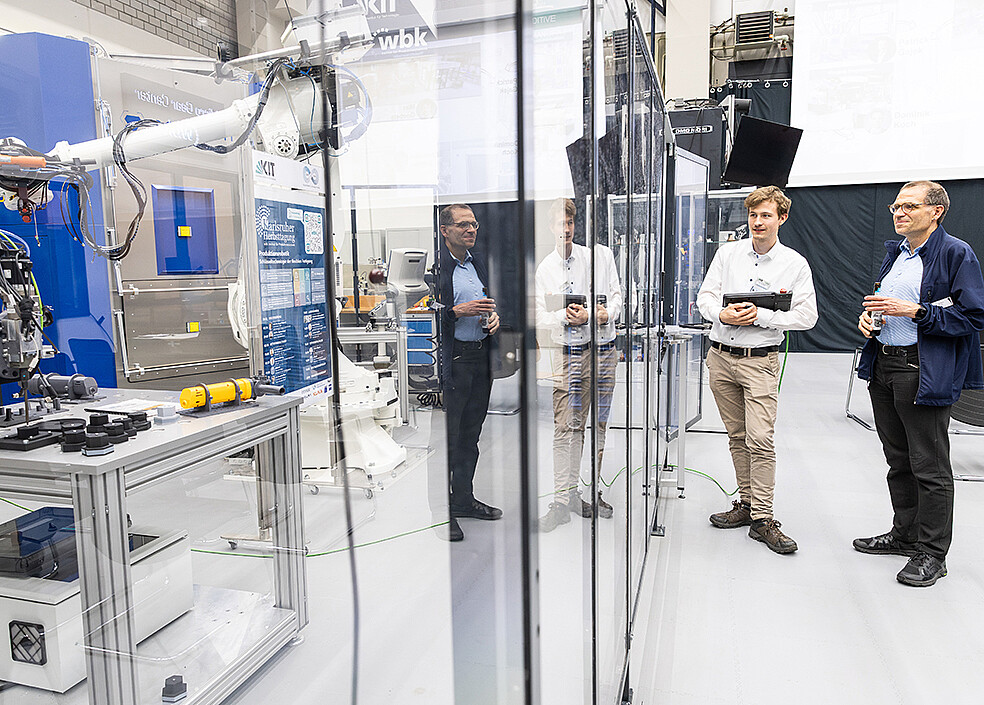
During the lab tour of the wbk Institute of Production Science, guests gained practical insights into the technologies of the “Circular Factory” in the transformer cell, from automated disassembly to additive reprocessing of returned products. (Photo: KIT)
comments about this article
No Comments