
Published on September 16, 2025
Express reactor design: From software to 3D printing
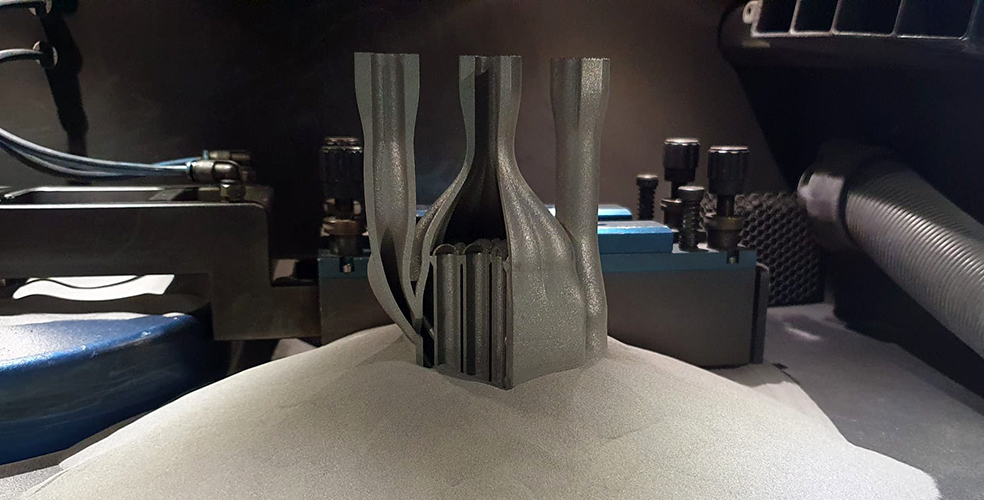
The chemical industry is facing a paradigm shift: While traditionally manufactured reactors often undergo months of planning and manufacturing processes, additive manufacturing enables completely new design approaches for process engineering equipment. But this is precisely where there are still hurdles to overcome. As a reactor developer, Mertcan Kaya from the Institute for Micro Process Engineering (IMVT) at KIT reports from his own experience: “Additive manufacturing allows us to implement geometries that cannot be produced conventionally. At the same time, however, the new reactors have to be mechanically stable and process-efficient. This is complex – and standard design programs are not yet geared towards this.” Kaya wants to close this gap with his newly developed automation solution.
Additive manufacturing meets automation
What began as his doctoral thesis as part of the joint research project “3D-PROCESS” funded by the Federal Ministry for Economic Affairs and Energy (FKZ 03EN2065E) matured into the promising development platform “ReacTUNE.” From 2021 to 2024, Kaya worked on the elaboration at IMVT in Prof. Christoph Klahn's group with partners such as Siemens, Evonik, INERATEC, and the Institute of Catalysis Research and Technology (IKFT) at KIT. “Overall, the project was about bringing the advantages of additive manufacturing to the chemical industry and developing the digital processes for this purpose – in such a way that reactors are more efficient, more compact, and more precisely tailored to the application. “From the beginning, my motivation was that the results of my doctoral thesis would solve specific problems in industry,” says Kaya.
From individual case to system solution
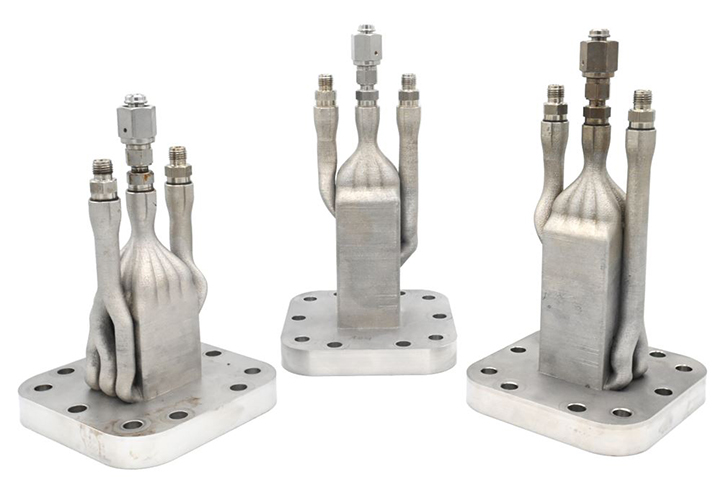
In a subproject, he focused on reactor design for chemical process engineering. Kaya soon recognized the potential for this process to be mostly automated and developed a system solution. Validation was carried out using the case study of methanol synthesis – an important component of power-to-X technologies. This process requires high pressures (up to 50 bar) and temperatures (between 220 and 280 degrees Celsius), which places special demands on the reactor design. "The goal was to optimize the methanol synthesis reactors and make them suitable for additive manufacturing. Everyone was satisfied because we were able to show that design automation works in process engineering. The advantage of additive manufacturing is that customised geometries can be created. With ReacTUNE, this can be achieved without years of design experience. The automatically designed reactors differ significantly from conventionally manufactured models," says Kaya. Automation does not only drastically reduce development time, but can also increase the quality of the designs.
Automation as a Turbo
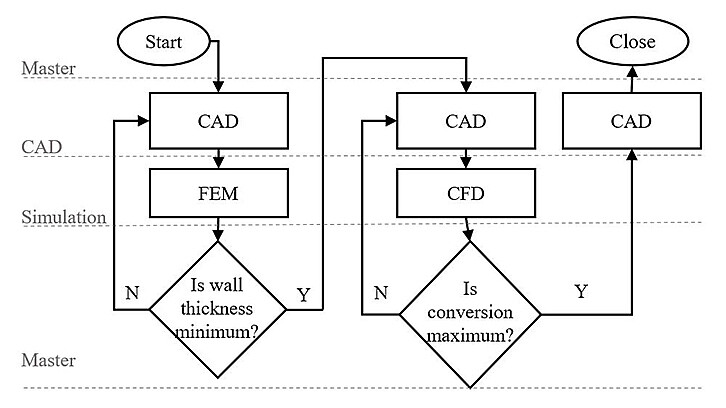
Normally, designing a reactor requires numerous manual steps in different software tools – from CAD (computer-aided design, i.e., design software) to CFD simulations (computational fluid dynamics, flow simulation) to FEM (finite element analysis, a method for calculating mechanical stability). “First, a CAD model is created, then separate simulation runs are conducted for flow and strength, the results are interpreted, and changes are made to the model by hand,” says Kaya, explaining the usual process. This cycle is often repeated dozens of times and frequently takes several weeks. Each iteration step involves highly qualified specialists and causes costs. Kaya's platform reduces this process to a minimum and promises a fundamental change in process engineering. Instead of months of development cycles, ReacTUNE enables rapid iteration of different reactor concepts and direct implementation using additive manufacturing. This not only decreases development time, but also minimizes the risk of encountering fundamental design problems in the late stages of a project. “The ability to integrate sensors directly into the reactor during additive manufacturing is particularly valuable. This allows chemical reactions to be monitored even inside the component – an advantage that conventionally manufactured reactors do not offer,” emphasizes Kaya.
Digital reactor tuning
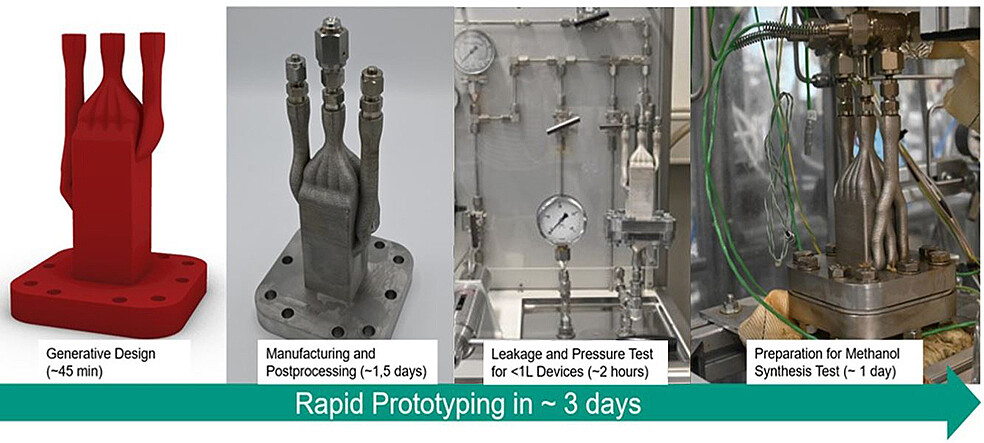
ReacTUNE, derived from reactor and tuning, is an IT platform that automates the entire design process – from the initial draft to the finished file for 3D printing in STL format. It not only generates a customized design, but also determines the best case scenario thanks to integrated sequential optimization processes. ReacTUNE is currently designed for the additive metal process of laser beam melting, known in professional circles as powder bed fusion laser-based metal (PBF-LB/M). Manufacturing limitations such as build space size or certain design rules are already integrated into the automation platform. “Based on individual process parameters such as volume flow, material, and target size, ReacTUNE generates the optimal geometry and improves both the reactor design and the process parameters in order to achieve the defined goal in the best possible way. In our example case, a printable reactor design for methanol synthesis was created within 45 minutes,” Kaya reports proudly. “This not only enables companies to react faster, but also to test more variants in less time – a decisive competitive edge in innovation-driven markets,” highlights the developer. The innovation lies in the intelligent linking of various simulation tools to create a fully automated design process.
Technology in the background, added value in the foreground
The software works according to the principle of knowledge-based engineering, in which process engineering knowledge is digitized and applied automatically. With the help of this knowledge base, the platform independently creates geometry models, pairs them with simulations, and evaluates the results fully automatically. Users enter their process parameters – such as catalyst size, porosity, or desired production volume – and the platform does the rest. Users still have a say and can select their favorite designs. Changes are integrated immediately until an optimized final design is available. “Instead of designing each geometry manually, simulating it in various software tools, and improving it iteratively, this process is fully automated and data-driven – reproducible and adaptable at any time,” Kaya explains. Prof. Klahn adds that this changes the role of engineers: “Instead of designing each individual geometric element, they now define the rules according to which the elements are generated.” This makes the work much more conceptual and creative.
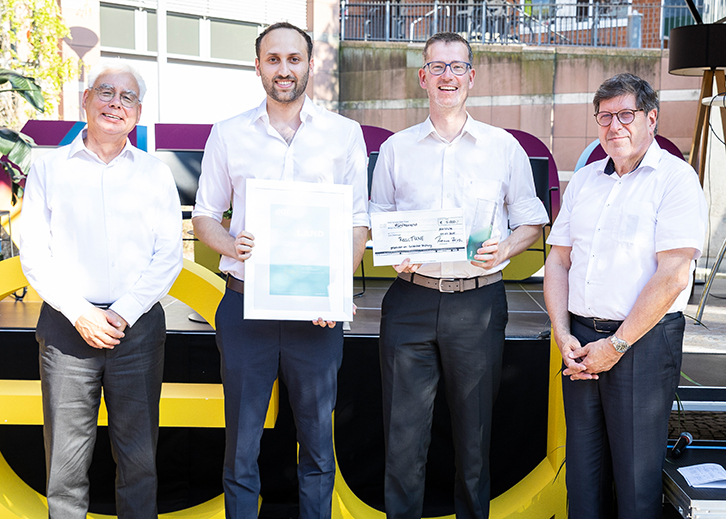
Partner wanted for the future
Although ReacTUNE was initially developed for methanol synthesis, the platform is flexible. “Our solution is not a rigid tool, but rather a development environment that can be adapted to different reactions and requirements. Technical parameters such as stiffness and strength are often similar. However, it is important to understand the chemical reaction and take it into account in the software,” says Kaya. For the next step, Prof. Klahn's team is looking for application partners who want to optimize their own reactors using the platform. Of particular interest are industries with high potential for additive manufacturing, such as direct air capture, gas synthesis, or pharmaceutical processes. So anyone looking to increase process efficiency and leverage manufacturing innovations could find ReacTUNE to be the right lever: "We are looking for companies that want to optimize reactors or equipment and are willing to explore new digital avenues of product development. In the end, it's not just metal that's being printed, but also a piece of the future," says Kaya. In the next stage of development, the platform will be further developed to make it more accessible and usable for customers. Kaya wants to get started with ReacTUNE as a founder. Therefore, the developer is still looking for a co-founder from the field of fluid mechanics specializing in CFD simulation.
comments about this article
No Comments