Clean coating – completely without biocides
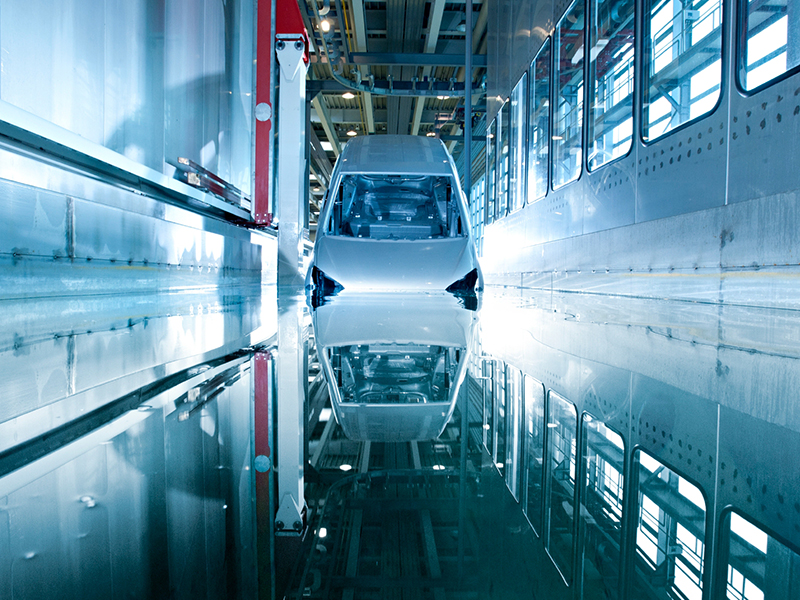
Before car bodies or metal goods such as radiators and washing machines receive their visually appealing and protective top coat, they undergo a multi-stage pre-treatment process. A key process step is electrophoretic dip coating, in which water-based paints are applied electrochemically. Microorganisms can multiply in the process liquids and paints to such an extent that they can significantly impair the quality of the paint and therefore the coating – for example through visible surface defects such as ‘orange peel’.
State of the art
To date, chemical biocides have often been used to reduce germs, but these pose risks to the environment, plant technology and process stability. Careful monitoring, special management, extensive protective equipment, specific storage areas and staff training are required. There is also a risk of bacterial resistance developing.
Technology
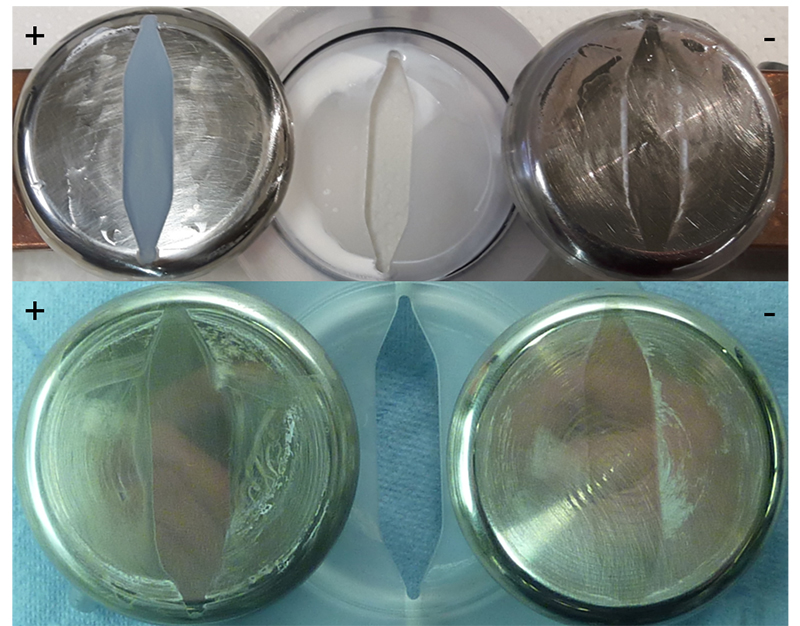
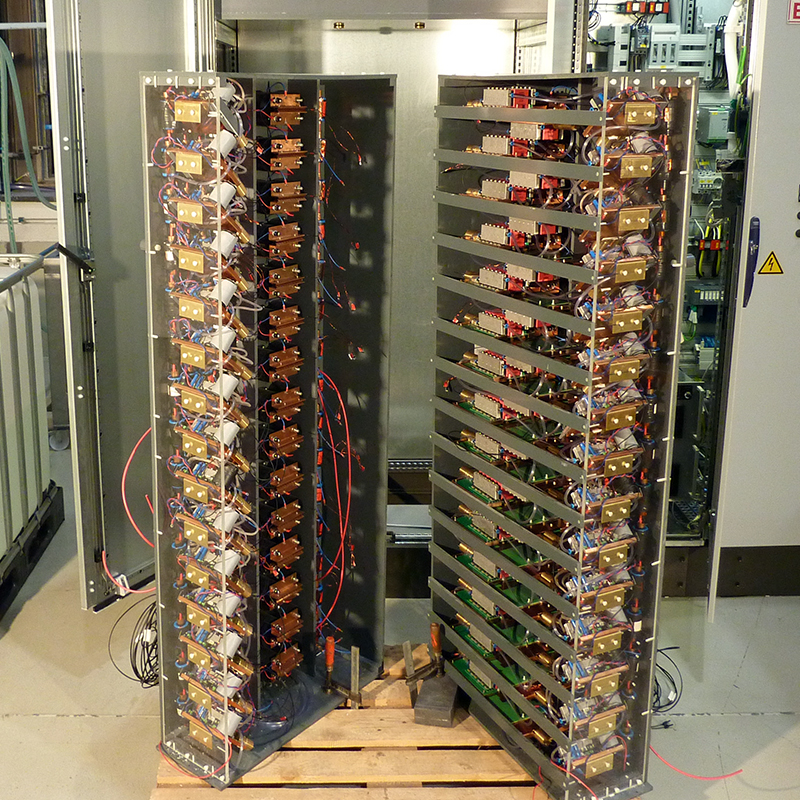
A physical alternative has been developed at the Institute for High Power Pulse and Microwave Technology at KIT: electro-pulse treatment based on bipolar high-voltage pulses. In this process, microorganisms are exposed to an intense electrical field that polarizes the cell membrane and ultimately leads to the death of the microorganisms. As this is a purely physical process, there is no risk of resistance developing. The process does not require any chemical additives and therefore enables sustainable, effective sterilization of the process liquids. The decisive factor is the use of extremely short, bipolar voltage pulses with symmetrical charge distribution. This prevents ions such as hydroxide or oxonium ions from accumulating on the electrodes and leading to paint deposition or unwanted electrode coating – a common problem with conventional unipolar electro-pulse processes.
Advantages
The process is ideal for use in modern paint shops in the automotive and metal industries, which can be retrofitted accordingly. Maintenance costs are reduced and operating costs lowered. The entry of biocides into waste water is completely avoided.
Options for companies
Partners are being sought for the implementation and further development of this technology – particularly from the automotive industry and the plant and paint technology sector. The aim is to jointly design user-friendly, practical solutions and validate the process in real process environments.
Images close open
Your contact person for this offer
Innovation Manager Karlsruhe Institute of Technology (KIT)
Innovation and Relations Management (IRM) Phone: +49 721 608-25587
Email: rainer.koerber@kit.edu