
Exoskeleton for more mobility in everyday life
Demographic change and the shortage of skilled workers in the care sector pose major challenges for society and industry. To promote the mobility of older people and maintain their independence, assistive robotics solutions such as exoskeletons could provide targeted support with movements.
State of the art
Assistive exoskeletons are not yet widespread, but are already being used in industry, for example to support assembly line work. Here, the mechanical helpers often focus on the upper body and are designed for specific movement patterns. There are only a few market-ready solutions for the lower extremities, mostly in the sports sector, which often only support a single axis of movement. Long-term effects of such one-dimensional devices on the human body, such as unwanted strain on neighboring joints, have hardly been researched to date.
Technology
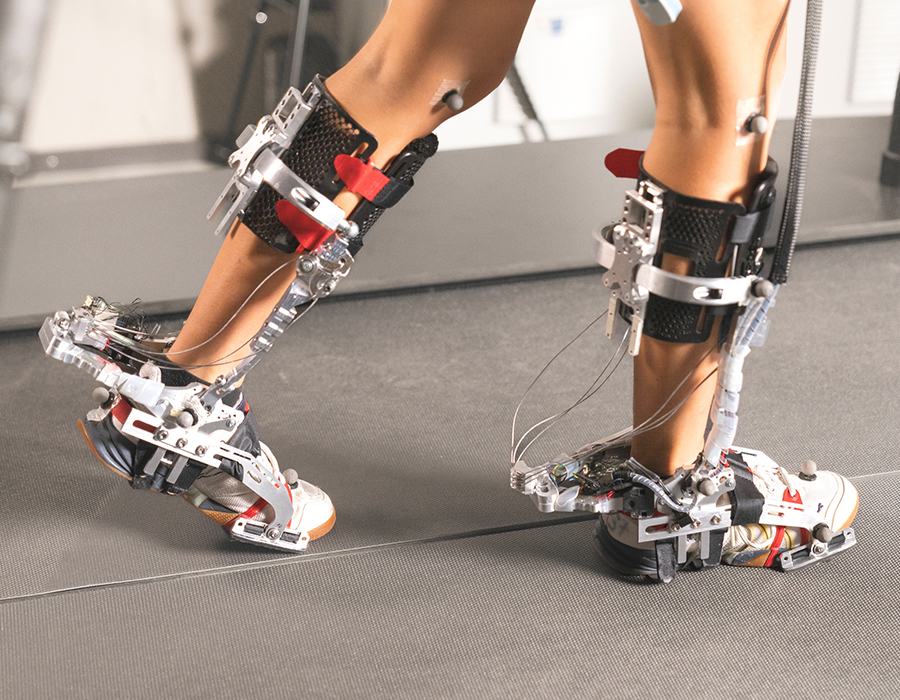
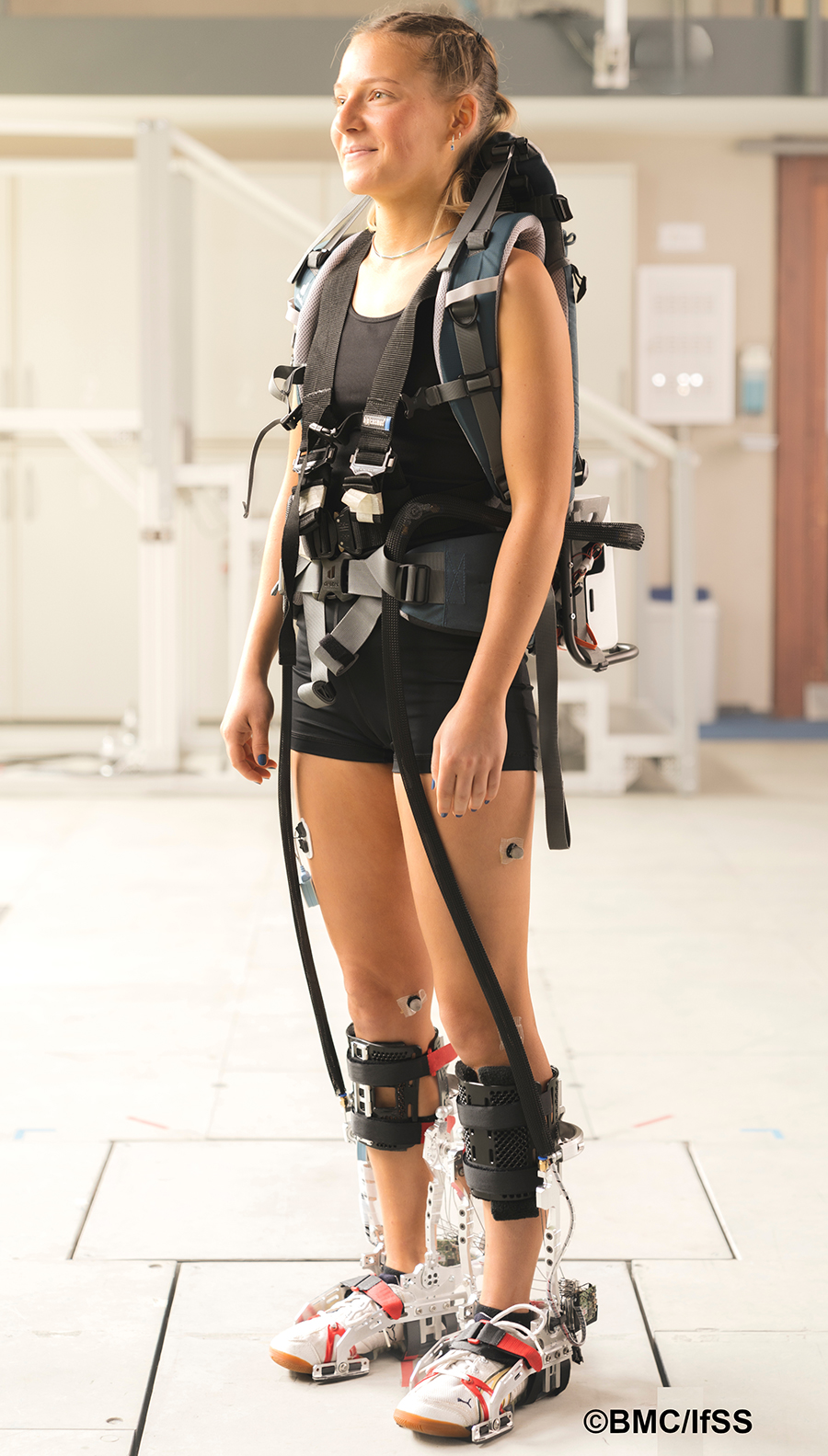
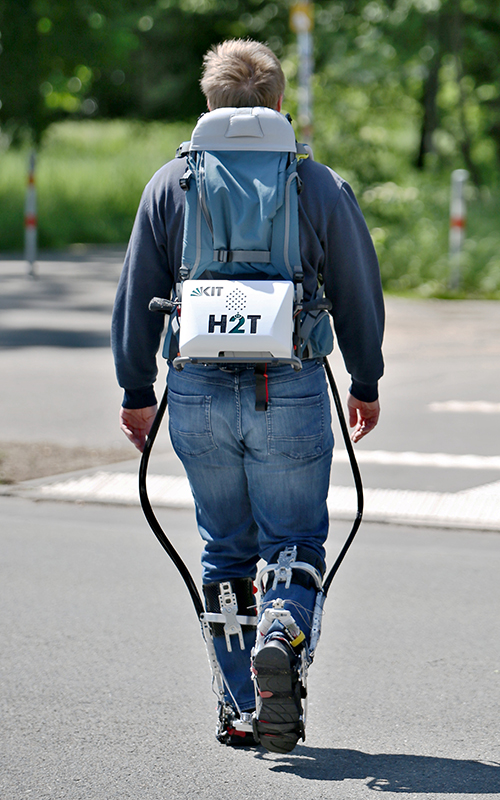
An exoskeleton that supports natural foot movement in several axes and specifically supports the ankle has been developed at KIT's Institute of Anthropomatics and Robotics (IAR). The technology reduces strain without restricting freedom of movement and makes everyday activities such as walking or shopping easier. The exoskeleton combines a lightweight but stable dressable frame structure with flexible movement support. A parallel kinematic system dynamically adapts to the movement of the foot, while sensors continuously record the movement sequence and provide controlled support. The motor is attached to a backpack-like belt. The mechanical support is provided by a targeted application of force using cable pulls that are activated when the ankle is in plantar flexion. Users can wear the exoskeleton over their own shoes, making it particularly comfortable and suitable for everyday use.
Advantages
The technology enables natural movement sequences and supports walking. The multidirectional support reduces incorrect strain and promotes physiological movement. Older and impaired people can remain more active, reducing the need for everyday care assistance.
Options for companies
The exoskeleton from KIT is suitable for everyday applications as well as for diagnostics or rehabilitation. The technology offers the opportunity to position itself in a growing market at an early stage. Therefore, KIT is looking for partners for further development and miniaturization through material and topology optimization as well as specialists for industrial design to increase social acceptance for wearing such an exoskeleton.
Images close open
Your contact person for this offer

Innovation Manager New Materials and Health Technologies Karlsruhe Institute of Technology (KIT)
Innovation and Relations Management (IRM) Phone: +49 721 608-26107
Email: jan-niklas.bloetz@kit.edu